18 January 2010

My 21 Favorite Albums of 2009

2009 — what a crapsuck of a year. Without overstating or getting into it, it was easily the worst since, well, high school at least and I am not sorry that it is over. If I ever needed an object lesson in saving power of music, this was it. Music was one of the few things that keep the year from being a complete personal disaster.

I've read others claim that 2009 wasn't a great year for music. In one sense I agree: there were few great albums — albums good enough to be considered for regular rotation let alone my favorite 100 albums of all-time. On the other hand, there were a significant number of "pretty good" albums released this year. These albums are good enough to keep around for occasional airing and mix-tape fodder if not ohmigod you got to hear this moments.

Albums 1-3 on my list are ones I consider "great" and have received many spins over the year and will probably receive many more over the next. On my personal rating system, they are the only albums I gave a 5 out of 5 to this year. Albums 4-21 all received a 4 out of 5, and they exhaust this category.

Not that this makes my list any more valid than the next guys, but I did try to keep up with new music this year. The following albums are culled from around 60 that I got this year. There were, more or less, three types of albums I picked up in the last 12 months:

1) New albums by artists I already like: albums from, for instance, Slayer, Clutch, Raekwon, Patterson Hood, Franz Nicolay, Marilyn Manson, Neko Case, etc. None of these albums made the top 21. (Maybe I'm a harsher critic on the artists I already love?)

2) Critically acclaimed albums: albums from, for instance, St. Vincent, Grizzly Bear, The Pains of Being Pure At Heart, Phoenix, Dirty Projectors, Girls. None of these albums made the top 21, though Girls would be #22.

3) Other albums that I thought might like for various reasons, like reading a review: many of these are in the top 21, but also include decent-but-not-great albums from Anaal Nathrakh, Lightning Bolt, Doomriders, and Emilie Simon.

I tell you this in an attempt to explain where my list is coming from and to (maybe) alleviate some why didn't you include X?

(I planned on including a song from each of the following albums, but my internet situation is, uh, unsettled. I'm posting this from the laundromat down the street, so I can't really upload anything. Apologies.)

NOW ON TO THE LIST!


Bonus: Worst Album of the Year: Animal Collective - Merriweather Post Pavilion
I cannot explain the depths of my hatred for this crap except to say: if this is the future of all music, like in a Bill & Ted type world, I'm selling all my records and becoming a monk. No joke. I can't explain why I hate it so much because to do so would require me to listen to it again and, though I may be a masochist, I'm not that much of a masochist.

Bonus: Most Disappointing Album of the Year: The Flaming Lips - Embroynic
They said it's a return to form. My favorite Lips album is In a Priest Driven Ambulance. Ergo, I thought I'd love it. Three tracks, maybe, but the rest deserves a slow shake of the head and closed eyes. Not a return to form.

Bonus: Album I like but only got after making the rest of the list and I'm to lazy to go back and revise it: Melody Gardot - My One And Only Thrill
I love Gardot's first album — it was one of the main albums that helped me get through the crapsuck of 2009 — despite my dislike (more or less) for jazz and jazz-y type music. I only found out that she released a new album 10 days before the end of the year. It's more consistent than her first and probably better.

#21: Converge - Axe to Fall
So low only, probably, because it was the last one added to the list and I haven't entirely digested it yet. Also it wasn't a big year in metal for me. Converge is a band I've been wanting to get into for a long time. Even so, this is the first (and only) album I've heard from them. It's good, if you like this sort of thing.

#20: Mastodon - Crack The Skye
Mastodon, or "The metal band all the indie kids love," as I like to call them, isn't exactly my cup o' tea. It's fine, and I like Crack The Skye more than Leviathan but less than Blood Mountain, but I don't get why the kids — indie and metal, for that matter — love it so much.

#19: Wild Beasts - Two Dancers
A hit-or-miss album with top-notch hits and no horrible misses averages out to "good." All The King's Men is the track that convinced me to get the album and it's probably my favorite, despite the hokey vocal hook. We Still Got The Taste Dancing On Our Tongues is another highlight and not just for the title.

#18: The xx - xx
It's way to indie for me to truly love it, but I have no problem with it appearing high up on other lists. Infinity is great, but the slow-burn earnestness of Shelter is my favorite track on the album, and one of my favorite tracks of the year. There's enough stuff here that I find middling (including the tedious Fantasy) for it to be ranked higher, but enough good that it still gets a spot.

#17: Camera Obscura - My Maudlin Career
I've only heard and gotten into Camera Obscura in the last few months. I fully admit that my like of this album may be because we're still in the honeymoon phase. A solid album, even if it lacks many highlights. The opener, French Navy, is one of the better pop songs of the year I heard. The closer, Honey in the Sun, is also up there.

#16: Alela Diane - To Be Still
If this were a list of my favorite albums I got in 2009, Diane's "The Pirate Gospel" could be #1. This album smooths the rough edges that were on Pirate — which is mostly a bad thing. The first half is fine if unexciting, but the second half makes up for it, starting with My Brambles, the best track on the album. Diane is quickly becoming one of my favorite female vocalists.

#15: Wax Tailor - In The Mood For Life
Got into Wax Tailor this year through the excellent and prolific Everything On My Ipod. As with most albums like this — DJ/Hip-Hop/Turntable, beat/sample-based — it's best listened to as one complete whole. Still, the poppy Dry Your Eyes, Leave It, and Greenfields easily stand on their own and are the highlights.

#14: Röyksopp - Junior
Really hit-or-miss, but the best tracks are amazing. The Girl And The Robot with Robyn on the vocals, is probably my favorite dance track of the year and one of my favorite tracks regardless of genre. Tracks 8-10 are what keeps this album from being higher.

#13: Jason Isbell and the 400 Unit - Jason Isbell and the 400 Unit
I may be alone in this, but I always thought that Jason Isbell was a step below Patterson Hood and Mike Cooley, his former compatriots in the Drive-By Truckers, as a songwriter. But Isbell's two solo albums have forced me to re-evaluate. This album is — and stop me if I've said this before — more consistent than his first but also lacks the greatness of tracks like Shotgun Wedding or In a Razor Town. Which isn't to say there are no highlights here. Clearly there are: Cigarettes & Wine is my favorite, but Sunstroke, The Blue and The Last Song I Will Write are great examples of Isbell's strength — the mid-tempo number.

#12: Russian Circles - Geneva
How do you judge instrumental post-rock? I have very little idea and I'm still relatively new to the genre. But like porn — isn't this how the saying goes? — I know it when I see it and I know what I like. Russian Circles has more of a metal vibe to it than most other post-rock bands, which is something I dig. The 10 minute closer Philos is the stand out track: reminds me of a more assertive Explosions in the Sky.

#11: Mandy Moore - Amanda Leigh
I know, right? I got this after reading a review at the awesome My Hmphs. Not many pop singers — or modern musicians in general — mine 1940's popular music for sounds and ideas. Moore does that on most of these tracks (the single I Could Break Your Heart Any Day Of The Week being the notable exception) to good effect. The best way I can describe highlights like Pocket Philosopher or opener Merrimack River is that they sound like a Preston Sturges film.

#10: Regina Spektor - Far
When I look at my list, I wonder if I ranked this album too high. See, Regina Spektor is an artist that I don't love and, on paper, wouldn't love. I don't find myself wanting to put her music on all that much. But when I do, even if it takes a few songs to get into it, I go all "Why don't I listen to this more often?" So, I don't know what all that means. Apparently it means the tenth best album of the year. The lead single "Laughing With" is my favorite and was an antidote to the crapsuckiness of 2009 I talked about in the introduction.

#9: The Antlers - Hospice
This blurb will say less (remarkable, I know) than any other blurb from this list. Why? I'm not sure how to describe this album — either in terms of its characteristics or in terms of why I like it. For the former, all I can say is that the vocals are mixed too low but that's probably okay given the ethos and pathos. For the latter — get back to me. Maybe I'll be able to say something intelligent after six dozen listens. It's best to listen to the entire album (and get the booklet, which is linked through the wikipedia article), but Bear and Two probably stand on their own the best.

#8: Pelican - What We All Come To Need
See my comments on post-rock in #11, though I think this is more "instrumental metal" than post-rock. Close enough, and the same thoughts apply. A solid album all the way through and difficult to pick any highlights.

#7: Baroness - Blue Record
Justifiably one of the more critically acclaimed metal albums of the year. It has more of a classic rock influence than most metal — this is a good thing! And, to my ears, there's some riffs and guitar lines that wouldn't sound out of place on a late-70's Queen record. Oh, it still rocks and it still shreds and it's still undeniably metal. If you want to get into metal but don't already like it, there are worse places to start. A Horse Called Golgotha is my personal fave.

#6: Tiny Vipers - Life On Earth
I want to say I heard about this album through John Darnielle's blog, but I can't be sure. This album took me a long time to listen to — I do most of my music listening while working or writing. Life On Earth does not lend itself to the background. It's quite and subtle enough that it demands you pay attention to it. Which is all fine because it's a great album and she has a great voice. Dreamer and the 10 minute title track are my favorites, though there are no truly weak tracks.

#5: The Mountain Goats - The Life Of The World To Come
And speaking of John Darnielle. First, let me say I love the conceit of using bible verses, but not explicitly talking about what the verses say. This reminds me of Krzyztof Kieslowski's miniseries "The Decalogue," which I also love. Second, there are no bad songs here and picking highlights is difficult since any track could do. Third, and this is the bad part, it's his second worst album (ahead of only Get Lonely) since All Hail West Texas. That it still gets #5 is just a testament to how awesome Darnielle is as a songwriter.

#4: Antony and the Johnsons - The Crying Light
What I said about Regina Spektor, above, is true here as well, even more so: I rarely want to listen to it, but it blows me a way when I do. Between this album, I Am A Bird Now and the Hercules and Love Affair album, I think you could make the claim that Antony Hegarty is one of the best vocalists working today. Best tracks? Epilepsy Is Dancing and Aeon.

#3: Danger Mouse and Sparklehorse Present: Dark Night Of The Soul
This album was never officially released due to a legal dispute with the label. But you can find it out there and the artists have condone the downloading since they like it and want it heard. And it should be. It's a magnificent album and you ought to have it. All I'll say is that the title is apt and it's one of the better late-night-drinkin-whiskey albums I've heard.

#2: William Elliott Whitmore - Animals In The Dark
Whitmore's first three albums are most acoustic, dominated by his banjo or guitar and rarely (if ever) using percussion. So it surprised the bejesus out of me when Mutiny, the first track on Animals, opens with just drums playing a martial beat before he intones: "It's a goddamn shame..." And the only other instrument is an echoing choir. It's amazing and one of the best political songs I've heard. (That's how I choose to interpret it, anyway.) It doesn't get better from there because it can't, but the entire album maintains the quality. Essential.

#1: Yusuf - Roadsinger
You know the story. In 1977 the man known as Cat Stevens converts to Islam, changes his name, and quits music while still at the near-top of his game. I grew up listening to Cat Stevens music so it has a great deal of nostalgic value. But it's not just nostalgia unlike, say, Billy Joel. Stevens had one of the best voices in pop music and wrote some of the more interesting pop music and, philosophically, had some of the better lyrics in pop music.

This, his second album since returning to non-religious music, is the best of his career. And it's the best album of 2009.

His voice hasn't deteriorated. It's still strong and emotive as those early 70's albums. Lyrically, time has only given more to write about and more perspective. Musically, it's similar to his classic albums.

I've long claimed that suffering makes the best music; the worst thing an artist can do to his music is to get happy. You can look at the history of music and find so many examples to support this claim. Stevens' 70's work is a good example. It's difficult not to interpret it in light of his eventual life choices, but it's not exactly wrong to do so: he was looking for something better, something bigger. (Consider Sitting, for example.) That lack, the cause of suffering, informed his best music. What makes Roadsinger his and the year's best is simple: it's a potent counterargument to the previous paragraph.

This album is from a man who is content, a man who has found the truth (or at least believes he has). But unlike crap like the entirity of CCM, it's not necessarily religious and it's not intended as commercial. Yusuf comes of as a man who is it peace with himself and he'll help you if you want him to, but if you don't he'll wish you the best as you move on your way.

Not that it's all happiness and rainbows. There's a recognition of the darkness in the world (ahem - World of Darkness, most explicitly) but it's coupled with the sadness that comes with knowing the right choice is difficult to make but also with the knowledge that we have the ability to make the choice despite the external realities.

Which is why, in the crapsuck that was the year, when the black dog came and came hard, something like this:

Saw a sign on the path: All seekers this way
A very subtle left through a petal my way
As I neard the bridge two soldiers stood and stared
No one passes by us up ahead
But you're welcome here.

and the next verse:

Carried on down the road to the marketplace
I was still alone and no one knew my face
Then a stranger sang with voice like the wind
Then the hails began to sing:
"Welcome in."


and the conclusion, spoken from experience:

Time rolls on and so we carry on
Time rolls on, ain't no good to sit and moan

provided both the promise of hope and the promise of things to come. That's the saving power of music, the ability of song to make things better, to tip the scales from the red back to the black. Sometimes that's all that's needed even if that little bit won't change the world.

(Posted by Lin)

18 November 2009

Only Mostly Dead

But that means we're partly alive.

We have every intention of starting this up again and soon. It might be after the new year (hopefully sooner); it will definitely be before the one year anniversary of our last post.

If you haven't done so already, add us to your rss feed, that way you won't have to wait one day longer than necessary for new content.

(And our apologies to our fans for just dropping off like that. But, you know, life.)

11 February 2009

Metarock: Value of Digital

(You can view this an extension of Brandon's post here, since it touches on many of the same things. You should note, as well, that I only have 250 tracks of Orthodox singing, which is more than enough for almost anybody.)

I've spent the last two weeks acclimating to my new place, new city, new time zone. This trip moved me a thousand miles. I left with a backpack and two bags: everything else was given away, sold, or stored.

This includes my music. The vinyl, the CDs, even that one cassette I own (Robert Johnson's Complete Recordings)...most are in a storage unit in the middle of the midwest. The rest, hopefully, are being given a good (temporary) home with a friend. I have 12 albums with me, 5 I brought, 7 I bought once I arrived here.

This is just physical media. I did rip most of the music to an external hard drive before I left, so I'm not in danger of running out of exciting music or having a listening itch that I can't scratch. (If I really find myself begging to hear, say, Billy Joel's Millennium Concert or the second Finger Eleven album, then I have bigger issues.)

Is this not a glorious time we are living in? I have over 40,000 tracks two clicks away and they physically take up as much space as my left hand. Thirty years ago I'd have crates of AC/DC, Sabbath, Springsteen, Cheap Trick, and the Damned to lug around, plus a turntable ('cause why would I buy a new one when I'd have a perfectly great one already?).

Eight years ago, when I moved 1500 miles for college, I had 224 CDs. I bought a case that allowed me to take the entire lot but not the jewel cases or booklets. I felt it was a bit of a loss not having the package, but the music is what's important, right? The subsequent 11 moves in 4 years between dorm rooms convinced me that the lack of extra bulk was virtuous.

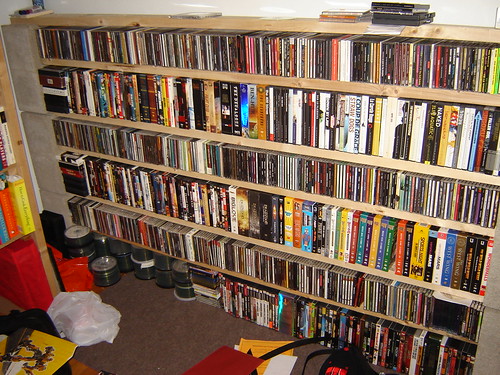
But still, when I got my own place and it seemed I was relatively settled, I once again brought out all those empty cases and added them to those I'd picked up in the intervening time. And when I finally got the whole thing set up, I was happy and impressed. Here's the picture, initially from a previous post:


Yeah, I'm a little sad that all I have now are 1s and 0s and code to show me what I got. I like having the booklet, I like having the case, I like seeing the CD sitting on the shelf. I like being persuaded to listen to an album because exposed end is garish yellow. I like the artwork. I like to read the essays included with compilations of old blues. This is all lost with a switch to a solely or mostly digital interface.

But...I have 1800 albums I can listen to right now that I couldn't otherwise.

I wonder: it'll be at least three months, but more like six or nine, before I get the physical copies back. In that time, will I feel the same way? Could I bring myself to sell all those discs at the local used store? Will I stay completely digital?

Well, no. Because, for me, it's not just about the music. I'm a collector. I like the aesthetic, the way rows of music look on the shelf. I like re-arranging my albums by things like spine color or how they fit into my personal narrative. And that's something you can't do with a digital copy. Not easily, anyway.

But I imagine 95% of what I'll play will be the digital versions.

Robert Johnson - Ramblin' On My Mind (take 1) [sounds almost as good on the cassette]
Cheap Trick - Stiff Competition [a very specific time in my personal narrative]
Gogol Bordello - Oh No [from that garish yellow album]

(Having difficulty uploading the files...will try again in the morning. Sorry.)

Posted by Lin.

09 February 2009

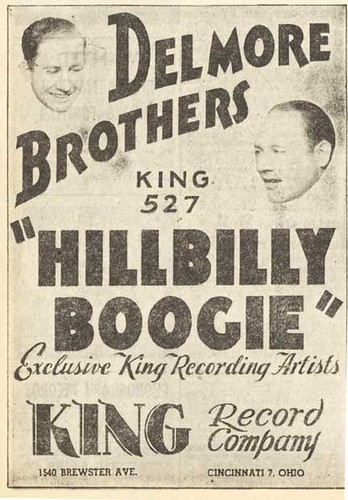
Reading Rock: Lost Highway (7), "Hillbilly Boogie"

With many apologies for our extended absence (life intervenes...)

The introduction to the next section of the book, "Hillbilly Boogie," gives us essentially the story I've been building us up to all along. With the coalescence of rockabilly as a commercial form of music, and most specifically with the arrival of Elvis, "the focal point of a revolution in taste and style," (94), we arrive at a great "widening" of the appeal and cultural significance of popular American music. This is the beginning of the era of what our good friend Bob Christgau calls the "monoculture"--that moment in American social life when the vast, racially mixed majority of Americans actually participated in a shared popular culture. For Christgau, near as I can tell, the high point of the monoculture is Motown, but for Guralnick, it's Elvis all the way.

For those of you aspiring musicologists and historians out there, the story I think Guralnick won't be telling (at least, not in great detail--the Hank, jr. chapter heads in this direction), is the influence of this monoculture--essentially rock & roll plus Motown soul--has as it feeds back on what's left of country and the blues. Obviously (at least, for my dear readers), neither were properly "folk" musics as of at least the 1920s, but nonetheless, the indelible impact of rock and roll on both is a story that I can see (Shania Twain meet Mutt Lange, hijinks ensue), but that I can't tell with depth or nuance. Just a thought.

The songs today are mostly early proto-rockabilly numbers--honky-tonk music with "boogie" in the title. Enjoy.


Merrill Moore - House of Blue Lights
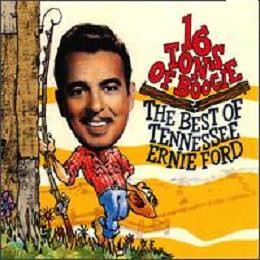
Tennessee Ernie Ford - Shotgun Boogie
Arthur Smith - Guitar Boogie
Jack Guthrie - Oakie Boogie
The Delmore Brothers - Hillbilly Boogie
Elvis Presley - Baby, Let's Play House
Johnny Cash - I Wish I Was Crazy Again
Jerry Lee Lewis - Middle Age Crazy

Posted by Brandon

30 January 2009

Metarock: Talking About Talking About Music (1): The First Salvo

The Dean of American Rock Criticism

"Unless you are very rich and very freaky, your relationship to rock is nothing like mine. By profession, I am surfeited with records and live music. Virtually
every rock LP produced in this country is mailed to me automatically, and I'm asked to go to more concerts than I can bear. I own about 90 percent of the worthwhile rock albums released since the start of the Beatles era, and occasionally I play every one of them, although I haven't heard half the LP's in my collection in six months. All this has a double-edged effect. On the one hand, I am impatient with music that is derivative and see through cheap gimmicks easily. On the other, I can afford to revel in marginal differentiation, delighting in odd and minor talents that might not be worth the money of someone who has to pay for his music."
-Robert Christgau, "Consumer Guide #1," Village Voice, July 10, 1969
One of the priorities Lin and I had when we started this blog was to have a conversation about how much the way we consume music has changed since we both started becoming "music" people in the late 1990s. I'll let Lin speak for himself, but my strongest memories of that initial, exploratory phase almost always involved a local record store (often visited in lieu of attending my afternoon classes) and an old Sony boombox, the pride of my teenage years. I can remember playing my Replacements records at top volume before my father got home from work, sitting on the bed and reading the liner notes and memorizing biographical details about Bob, Paul, Chris, and little Tommy that no one would ever ask me about. I remember listening to Wilco's Summerteeth, turning the volume up and down while my father mowed the lawn, moving back and forth from my window to the driveway. I remember convincing my mother to let me sign up for the BMG service that sent you 10 free CDs if you payed full retail price on two more (and back in those days, full retail price was $18 or more--another reason no one I knew ever shopped at Sam Goody in the mall).

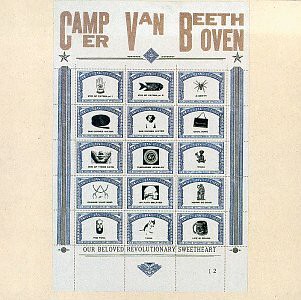
But mostly, I remember when I had no more CDs than would fit in a single copier paper box. They had personalities, it seemed--I knew where the scratches were, and which jewel cases had cracked fronts or broken tines in the little circle that secured the disc. I poured over every detail of every liner insert--no matter how little information there was to find. I had a clear sense of the value of my music back in those days. I knew what the investment meant to me, both in money and in time digging through the stacks. I remember the sheer joy of finding something I had read about at the library, or had been mentioned on one of my music listservs. Months of looking, of slipping away from my parents on vacations to stick my head into thrift stores and little music stores, checking the new arrivals racks at the used store back in La Crosse every week. When I found Camper Van Beethoven's Our Beloved Revolutionary Sweetheart that afternoon in the spring on 1999, it made my week. And I didn't even know what it was going to sound like.

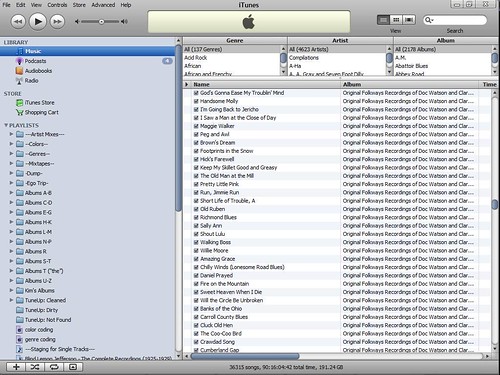
Now, after Lin's visit last week, I have 36,316 songs in my iTunes library. It's about 1800 separate "albums," but would take 1633 blank CD-Rs to contain its epic grandness. And Lin's collection is at least 25% bigger (a fact I chalk up solely to his collection of Orthodox church singing, and that year I was in Nigeria without internet access). Christgau's collection circa 1969 was probably bigger, but mine is almost certainly broader (this was,
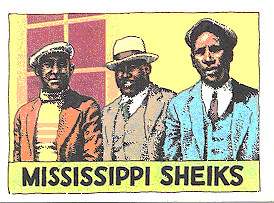
I'm reasonably sure, before he discovered Papa Wemba and Franco and became America's greatest proponent of African pop music), containing all manner of music from the rock "canon," but also nearly complete discographies for many of the major artists of the rock and roll era and a staggering collection of blues, classic country, and soul box sets. When music became so easy for me to get, my response (as, I suspect was Christgau's) was to become nonsensically cosmopolitan in my tastes. While it's easy enough for me to summarize my basic preferences and my favorite musical themes (I'm going to forgo the word "genre" here, for reasons that will soon become apparent), my collection is probably more diverse that 95% of the people in this country who consider themselves music fans. That said, there are still entire styles of music that are basically unrepresented (ambient and all the various forms of electronica, classical), which means occasionally I'm accused of parochial tastes by people in casual conversations about music. The notion that a man who owns the Complete Hank Williams Collection, a half dozen Fela Kuti records, everything Elton John recorded between 1970 and 1976, the complete Mississippi Sheiks' recorded works, two Conway Twitty albums, four Ice Cube platters and a disc of early M.I.A. & Diplo mixes is a little crazy, but there it is anyway.

Really, I find it all a little alienating. It sounds ungrateful, but there are days I miss being able to identify every CD I own by comparing the pattern of scratches on the underside. It's harder to forge the strong emotional connections I had with the records I listened to three times a day for six months in 1996 when I feel compelled to check out some of my new haul everyday. I rarely get through complete albums anymore--and frankly, as much as I really like pre-war black string band music, I don't think I'll every play the entire four and a half hour Mississippi Sheiks playlist in a single sitting. The irony is that this is all happening just as my life is changing more generally, in a way that mak
es my vastly expanded musical knowledge less and less relevant to my identity in the minds of most of my acquaintances.

When I was in college, I probably never owned more than 350 albums, but music was a constant part of my everyday self. I deejayed dance parties and on the college radio station, and always insisted on curating the music at dorm room gatherings, even when they consisted on nothing more that six people crammed onto a futon staring down at a case of warm Coors Light. The songs I played when I was with my friends, or when I was at parties, were more than just the songs I liked--they were an attempt to signal what I was all about (and perhaps, get laid in the process). When music is such an investment, as it was for me on my college budget, you don't invest flippantly in the new thing, no matter how big it's getting. You build a collection from the bottom up, with a limited selection that you're sure you'll continue to like (or, as sure as you can be at 20) and that will tell the appropriate story about who you are. But now, just when I have the ability to wow the masses with a truly diverse, exotic, and free-wheeling collection that fits in my pocket, I don't have any more parties to go to. None of the other grad students in my program have expressed any real interest in pop music in the broader sense--most conversations I've had about music bog down in the first two minutes. Someone will tell me their favorite band, and I'll start talking about my new reggae compilation, and then they'll politely excuse themselves. What people want to know about me--as a scholar, as a teacher, as a married guy in his late 20s--has very little to do with my music taste. The only difference between me and the rest of the iPodded masses is the size of my headphones (and no, that's not a metaphor for anything).

So ultimately, this is my introduction to a new line of inquiry we'll be undertaking here at She's Making Whoopee in Hell Tonight--given the inordinate amount of music we all have, and given that this makes us not in the least cool, and furthermore, given that we must have acquired it because we want to listen to it, who do we turn all those files into something accessible, something useful? How do we make the music work for us?

The first tentative steps in this direction will probably focus on how we classify and sort our music, starting with a discussion of "genre." Anyone who's had the ill-fortune to import a record into iTunes knows that the Gracenote database they use to tag the information onto the songs uses an unwieldy, dense tangle of genre nomenclature--a taxonomy rooted in neither how we listen to music nor how artists make it. How can we classify our music? Is it worth trying, and if so, what's the payoff (hint: for me, it's having a way to divide up my music into workable chunks I can listen to on shuffle, the way that I used to listen to the radio. This is how I'm forced to take on all that new music in manageable, well-programmed chunks)? We'll almost certainly be looking at the academic literature on music genre taxonomies going on in various information systems journals (because that's what we do). Stay tuned.

Franco et le T.P.O.K. Jazz - Liberté

The Mississippi Sheiks - Bootlegger's Blues
The Mississippi Sheiks - Sittin' On Top of the World
Camper Van Beethoven - Waka
Camper Van Beethoven - Eye of Fatima (pt. 1)


Oh, and for the dozen or fewer of you who care, Reading Rock: Lost Highway will be back with a vengeance between now and Tuesday, with a new post and those promised .zip files. Holler.

Posted by Brandon

27 January 2009

Reading Rock: Lost Highway (6), Bobby "Blue" Bland


Growing up in La Crosse, Wisconsin, there weren't many opportunities for "real" live music. There were the bars, and a few local (mostly cover) bands. My sister was in the high school choir, for what it was worth, and during my middle school years, a gothic/electronica club opened downtown that brought in a band every now and again. The main sources of professional live music were the universities (UW-La Crosse and Viterbo) and the civic center. As was to be expected, the universities tended towards upper-middlebrow culture--jazz, polite folk, anything with harps. The civic center was where the action was.


In his contribution to the 33 1/3 series (on the Replacements' Let it Be), Colin Meloy (of the Decemberists), who grew up around Helena, Montana, speaks of a similar scenario. While in middle school, he finds himself caught between two worlds--he watches "120 Minutes" and clips concert announcements from the New York Times for Depeche Mode and Echo & the Bunnymen, but when presented with the opportunity, he snaps up concert tickets to a Nylons show, starved for live music. He hates it, but is strangely fascinated by the performance--particularly the sexuality, and the effect it has on a female classmate. From what I can make of it, it's like a second-hand rock experience for Meloy--even if the Nylons are terrible, derivative schlock, seeing their performance crystallizes the power music has for him. If these guys can get the girls screaming, what might Westerberg be capable of?

For me, there were two similar shows, one well attended (like Meloy's) by my school cohort and the focus of youth culture in my town for some weeks, and the other largely unnoticed by my peers. In 1998, I saw Aerosmith live in concert (I still have the tee-shirt--find me on the right day and I'll flash it to you). While, like many a weakly-mustachioed boy, I was a fan of classic rock, this was the Armageddon-soundtrack, Diane Warren-singing Aerosmith. They played the old hits, but the girls, well, they didn't want to miss a thing, and Messers Perry and Tyler ensured them they wouldn't. It was a rote performance--a small scale version of rock stardom for the small stage of a small town. And when they packed up and left, we all sat around in first period algebra and spoke of having our worlds rocked--the way the bass felt in our bodies, the cheap beer that had been spilled all over us, the crowd-surfing (!?!). It was all a lot for La Crosse. But even then, I think I realized it was (as would have any other of the classic rock bands that made up most of my daily rotation those days) a simulacra of what I was really looking and hoping for, a shadow of rock, but not the thing itself.

The better show was the one I saw a year earlier at the same civic center. The B.B. King Big Band and Review was nothing I expected from the blues (a genre I knew exclusively from CDs), although as I've gotten older, I've realized just how typical of the modern blues it is. I sat in the 5th row, surrounded by baby boomers--the youngest non-chaperoned person in my line of sight. Much like the Bobby "Blue" Bland gig described by Guralnick, the show opened with extended vamping by the horn-laden "Big Band," purveyors of a half-jazz/half-jump blues sound that, while pleasant, wasn't anything special. It was bland, generic blues for almost an hour before King came on stage. While it was one helluva show-business entrance, the 45 minute set-as-payoff was both moving and disappointing at once. B.B. is a master showman, and while his singing is not what it was in the mid-1970s, his guitar style has held up reasonably well, and he played those single notes with impeccable phrasing and smooth interaction with his band. But even then (and I'm not shitting you--I did actually think this, or at least as reasonably inarticulate version of this, at the time), I think I realized just how far this music was from the stuff I'd fallen in love with on record. And I still loved it. But for the B.B. King Big Band and Revue, the music had become something different--something that could work for mid-sized audiences in Wisconsin.


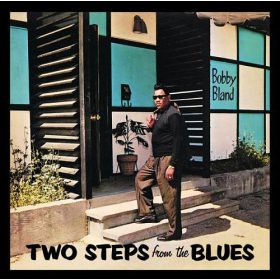
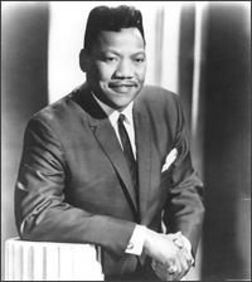
This was a transition that, by the mid-1970s, Bobby "Blue" Bland was in the midst of making, and the growing pains were evident. Guralnick clearly thinks the world of Bland and his music (the only other places in the book where his fandom oozes through the cracks are when he talks about Charlie Rich and James Talley), and the man he portrays is having a hard time with the evolution. His band is in flux, he's still playing venues smaller than his stature merited, and his style of music has gone out of fashion (again? The point of course, being that his career has spanned enough eras that this wasn't the first time). His early tracks (which, I should point out, I had never heard before reading this book for the first time several years ago) are a revelation--tough, muscular guitar playing with tight horns--and of course, that voice. It wouldn't be Guralnick if it wasn't transitional music--sort of halfway between Wynonie Harris and Muddy Waters, a non-gospel bridge from the blues to early soul. In any case, it's my favorite of what I've discovered off this little project so far. It's got soul, you can use it to advance a claim about the history of American pop music, and he's the last artist in the "Honky Tonk Heroes" section. Look out for: 1) the complete Reading Rock: Lost Highway, pt. 1 ("Honky Tonk Heroes") .zip file round-up, and 2) the first post from Lost Highway (2), "Hillbilly Heroes."


Bobby "Blue" Bland is 79 years old today. Sing it.

Al Green - Love and Happiness
Bobby "Blue" Bland - Further Up the Road
Bobby "Blue" Bland - I Smell Trouble
Bobby "Blue" Bland - It's My Life, Baby

Rev. C.L. Franklin - The Eagle Stirreth His Nest
Bobby "Blue" Bland - Little Boy Blue
Bobby "Blue" Bland - I'll Take Care of You
Bobby "Blue" Bland - I Pity the Fool
Bobby "Blue" Bland - Cry, Cry, Cry

Charlie Rich - Who Will the Next Fool Be?
Bobby "Blue" Bland - Who Will the Next Fool Be?
Bobby "Blue" Bland - You're the One that I Adore
Bobby "Blue" Bland - Call on Me
Bobby "Blue" Bland - Loneliness Hurts

Posted by Brandon

22 January 2009

Reading Rock: Lost Highway (5), Rufus Thomas

Why was Rufus Thomas obsessed with animals? I have looked and looked, and I come to you today with no answers, only questions. And that's the thing about Rufus. Born in 1917 but not famous outside Memphis until the early 1960s, and a major factor in the early successes on Sun and Stax Records, two of the most influential labels in American history, Rufus Thomas bridged two eras in popular music, but never truly became a star in either. The first of the two "Honky Tonk Heroes" in Guralnick's book to have worked exclusively outside the honky tonk milieu (well, not really, if you're flexible on your terminology--the man worked the tent shows, dance halls, jook joints, and "Chitlin' circuit" venues, which Guralnick would probably be quick to point out, weren't all that different from "honky tonks" in most ways), Thomas's career is a pretty efficient metaphor for the creation of rock & roll and soul, and makes him the paradigmatic Memphis man.

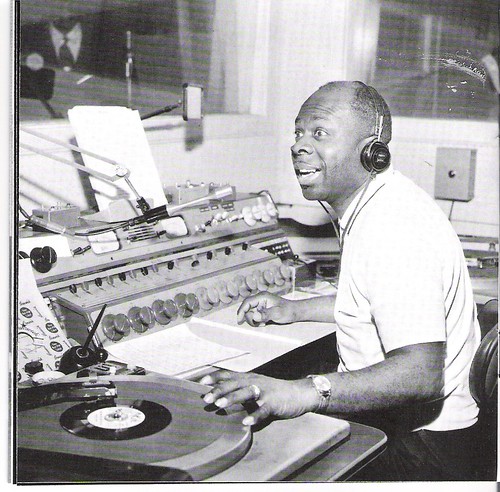
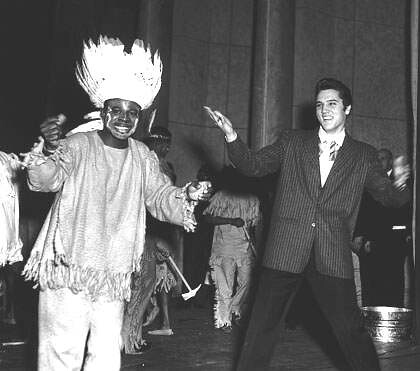
Thomas started out in late-era minstrel tent shows in the late 1930s, but by the early 1940s he was a fixture on the Memphis music scene, hosting a popular amatuer show at the Palace Theater, and featuring B.B. King and Bobby "Blue" Bland. He held down a radio show on the celebrated radio station WDIA, the most influential station in the South to feature black performers and on-air talent, and later, the first programmed by African-Americans (Now, sadly, it plays what its management refers to as "light urban"). As Guralanick reports it, he was a one-man racial divide wrecking-crew (which, given the themes we've discussed thus far, would seem to be why he's included in this section)--an Opry fan hosting a show on a Black radio station, but also the "first black jock in the city playing the Beatles and the Rolling Stones" (p. 62). He sang and performed locally, cutting a few sides in the 1940s, but his first hit (and one of Sam Phillips' first Sun Singles) was "Bear cat," a response record to Big Mama Thornton's "Hound Dog" (#3, R&B). This was the transitional moment, in both my telling and Guralinick's--the birth of his obsession with animal songs (me), and the beginning of Sun's move to white artists, at the literal and figurative expense of performers like Rufus Thomas (Guralnick).

But this was not the end for Rufus. He continued his radio work, gigged out locally and toured, and when he and his daughter Carla (yes, that Carla Thomas) recorded a duet for a local record label, Satellite, its success led to wider distribution of Rufus's work and a new name for his label--Stax. He spent the rest of his career playing off the success he had in 1963 with his seminal dance hits, "The Dog" and "Walking the Dog" by touring and playing festivals, recording a number of minor dance hits (nearly always prefaced in name with the phrase "Do the Funky" and suffixed with the name of an animal), and eventually settling into a groove as a local Memphis legend and periodically recording for late-model blues labels like Alligator. He passed in 2001 (but this week, we're forgoing headstone pictures in favor of animal pictures, in fitting tribute).

Why Rufus? Because he exemplifies two of Guralnick's unspoken main points--that black and white music were thoroughly intertwined before Elvis, and that certain crucial performers were living, breathing bridges between the traditions of musical performance and dissemination in the rural South prior to WWII, but also personified the very rise of rock and roll itself--the role of radio deejays and small labels, as well as the radical re-inventions in sound. All of what we're presenting here (constrained as we are by the text) is Rufus's later work (excepting "Bear cat"), but I imagine that with better ears than mine you can imagine how American pop went from the minstral show to "Do the Funky Chicken" in one move.

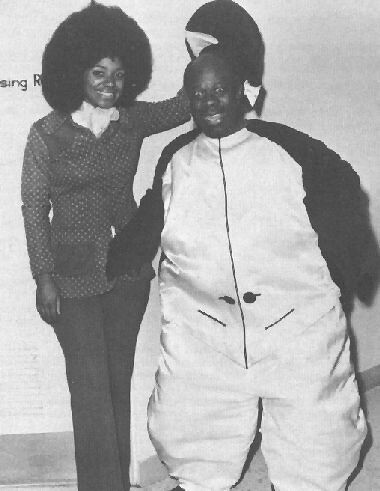
Oh, and that last sentence is not an attempt to denigrate Thomas's work or imply his stage act or his act is "modern minstrelry"--because it's not (even though when "Do the Funky Penguin" hit, he sometimes wore a giant penguin suit). He was simply a malleable performer able to work in a pop/soul vein to appeal to new audiences--just as the grittiest of delta bluesmen often performed (if rarely recorded) pop songs and sentimental music alongside their more "gritty" material.

Take it away, Rufus...
Big Mama Thornton - Hound Dog

Rufus Thomas - Bear Cat

B.B. King - 3 o'Clock Blues

Rufus Thomas - The Dog
Rufus Thomas - Walking the Dog
Rufus Thomas - Do the Funky Chicken
Rufus Thomas - Push and Pull
Rufus Thomas - Do the Funky Penguin

Rufus and Charla Thomas - Cause I Love You
Carla Thomas - Gee Whiz

Posted by Brandon